


Blog
Angular Coaching Platform
Rescue: Rebuild
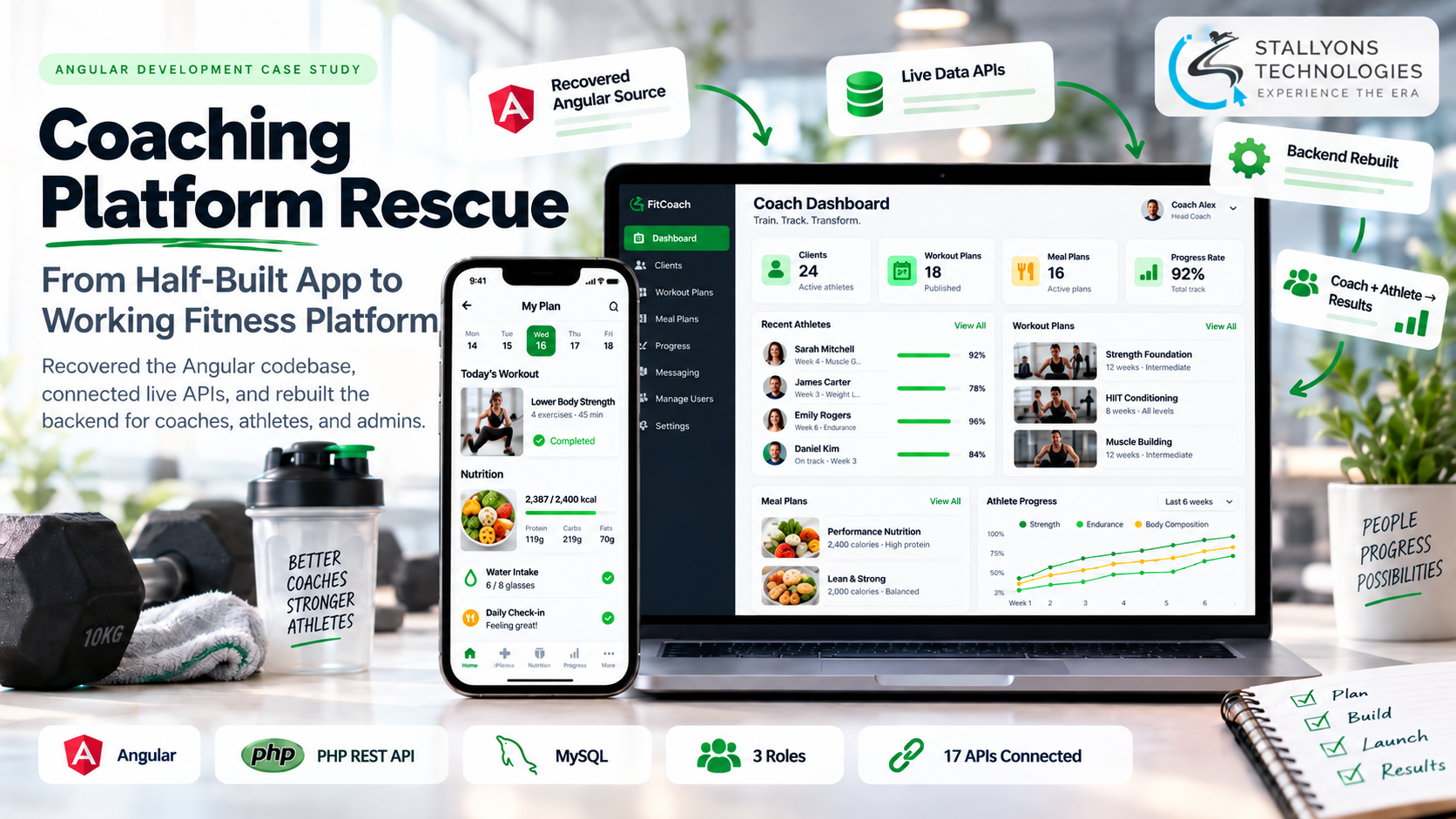
A coaching platform was already live, with coach, training and nutrition screens a visitor could click through. The problem was that almost none of it was real. The screens showed static content instead of a coach’s actual workouts or an athlete’s real progress, the full front-end source sat with a developer who had moved on, and the server code behind it was a tangle that made every new feature a gamble. It looked like a product and behaved like a demo.
Our client is an Italian digital agency building that platform for a fitness business. The idea is simple enough: coaches create workouts and meal plans and assign them to athletes, athletes follow and track them, and administrators manage accounts and content. We were brought in to make the Angular front end dynamic by connecting it to the platform’s APIs, and an early audit showed the job was bigger than wiring up a few screens.
Put simply, we recovered a half-built Angular app, connected the screens that had working APIs, then rebuilt the backend so the rest of them had real endpoints to call. A coach now builds a plan, an athlete follows it, and the results flow back, with live data end to end.
The Starting Point: A Live Platform That Showed Static Data
Taking over someone else’s half-finished codebase is a particular kind of work, because the first task is finding out what you actually have. Our audit of the front end, the backend and the API documents turned a vague brief into a clear list of problems to solve.
- Incomplete source. The complete Angular code was held by a former developer and had to be recovered before any work could begin.
- Static screens. Training, nutrition and coach views were rendering fixed content rather than reading real data from the database.
- Missing APIs. Many of the flows the screens needed had no backend endpoints behind them at all.
- A fragile backend. The server was unstructured PHP, so every new feature risked breaking something already working.
- Three roles to cover. Administrators, coaches and athletes each needed their own screens and their own data, not a single shared view.
- Documentation in Italian. The specifications were written in Italian and had to be translated and confirmed before anything was built on them.
The Build: Recover First, Then Rebuild
The work ran in two clear stages. First we recovered the full Angular source, rebuilt its missing dependency setup and resolved the version conflicts so the app would compile again, then connected the screens that did have endpoints, so coach and training views began showing live data. Knowing when to connect to existing APIs and when to replace the backend outright is the judgement a web development company earns from doing recovery work, and we set out the gap plainly before touching it. The sequence looked like this:
- We audited the front end, backend and API documents and reported where the gaps were, so the client could decide what to fix.
- Once the client recovered the full source, we rebuilt the dependency setup and fixed the version conflicts so the Angular app ran again.
- We connected the APIs that already existed, and the first live data appeared on the coach and training screens.
- With the client’s agreement, we rebuilt the backend as a cleaner REST API and added the missing endpoints for accounts, training, nutrition and assignments.
- We completed the missing screens from the Figma designs and connected each role’s flows to the new API.
- We uploaded the finished platform to the client’s live domain, then ran a follow-up round on the nutrition calculations from their feedback.
Rather than patch endlessly around endpoints that did not exist, we replaced the unstructured server code with a structured PHP REST API on MySQL, checked each endpoint in Postman before wiring it in, and shared the code with the client’s team through GitHub. Treating the server rebuild as proper API development, with clean endpoints for every flow, is what turned a fragile base into one the client could keep building on.
Technical Architecture
The front end is an Angular single-page application, kept rather than thrown away so the client’s existing investment was not wasted, with role-based routing and screens wired to a rebuilt REST API. The hard part was not any single feature. It was taking recovered, incomplete code and a fragile server and turning them into one connected platform where three roles each see real data. Each layer has one job.
- Angular single-page application. The recovered front end, with its dependencies rebuilt, role-based routing, and every screen connected to live endpoints.
- Rebuilt PHP REST API. Structured server code replacing the old tangle, with clean endpoints for accounts, training, nutrition and assignments.
- MySQL database. The store for users, workouts, meal plans, assignments, feedback and results that the API reads and writes.
- Role model. Admin, coach and athlete, each with their own screens and data, from one login into role-based routing.
- Figma reference. The design source we used to complete the screens that had never been built.
- Postman and GitHub. Every endpoint checked in Postman before wiring, and all code shared with the client’s team through GitHub.
The part that needed the most care was the decision to rebuild rather than patch. Wiring the Angular screens to missing endpoints would have meant stacking workarounds on an unstructured server that was already failing the client. Setting out the gap clearly, then rebuilding the backend as a REST API with the endpoints the flows actually needed, cost more up front and left a stable base for every feature after it.
Challenges Solved
The first challenge was code held by a former developer. Work had to pause until the client recovered the full Angular source, after which we rebuilt the missing dependency setup and fixed the version conflicts so the application compiled and ran again. The second was endpoints that did not exist. Rather than patch around them, we reported the gap plainly, and with the client’s approval rebuilt the backend with the endpoints the flows needed, which is a slower start but a sounder finish.
The third challenge was working across a language barrier. The specifications were in Italian, so we translated and confirmed each task with the client’s own backend developer before building it, which kept the rebuild aligned with what the client actually intended. Throughout, we kept the Angular front end the client had already paid for and completed it, rather than starting over, so the earlier investment carried forward into the finished platform.
The Result
The platform went from static screens to a live, role-based product: coaches build workouts and meal plans and assign them, athletes follow and track them, and administrators manage accounts and content, all reading real data from the rebuilt API. The first scope of listed APIs was connected, the backend was rebuilt on a stable base, and the finished platform was uploaded to the client’s live domain, with a later round refining the nutrition calculations. The agency has a product it can keep extending rather than a demo it had to apologise for.
If you have inherited a stalled or half-built codebase, you can hire Angular developers who have recovered and rebuilt projects like this, or tell us where your build stalled and our US-registered web development company will audit what exists before changing a line. It suits teams building health, fitness and wellness platforms where coaches and clients work from the same data.
Frequently Asked Questions
What was the Coaching Platform Rescue?
It was a recovery and rebuild of a half-built Angular coaching platform for a fitness business. The screens showed static content, much of the backend was missing or fragile, and we recovered the front end, connected the working APIs, then rebuilt the backend so coaches, athletes and administrators all worked from live data.
Why rebuild the backend instead of patching it?
Many of the flows had no endpoints at all, and the existing server was unstructured PHP where every change was risky. Patching around that would have stacked workarounds on a failing base. With the client’s approval we rebuilt it as a clean PHP REST API on MySQL, with proper endpoints for accounts, training, nutrition and assignments.
Did you keep the existing Angular front end?
Yes. The client had already invested in the Angular single-page application, so we recovered the full source, rebuilt its missing dependency setup and resolved version conflicts so it compiled again, then completed the missing screens from the Figma designs rather than starting over.
How did you handle the three user roles?
Administrators, coaches and athletes each sign in and reach their own screens through role-based routing. Coaches build and assign workouts and meal plans, athletes follow and track them, and administrators manage users, access and content, all backed by the same rebuilt API and database.
Can you take over a project another developer started?
Yes, and we start by auditing what exists. We review the front end, backend and any API documentation, report the gaps clearly, and agree what to recover, rebuild or complete before writing code. That is how we handled the recovered source, the missing endpoints and even specifications written in another language on this project.