


Blog
QC.Taxi: Whitelabel Ride-Hailing
App
Someone stands on a Québec street and wants a taxi. They expect to book it in a few taps, watch the car approach on a map, and pay without cash, the way the big ride-hailing apps work. A local taxi firm might have the drivers and know the city better than anyone, but without an app of its own it loses that rider to a global platform, along with the brand, the rules, and a slice of every fare.
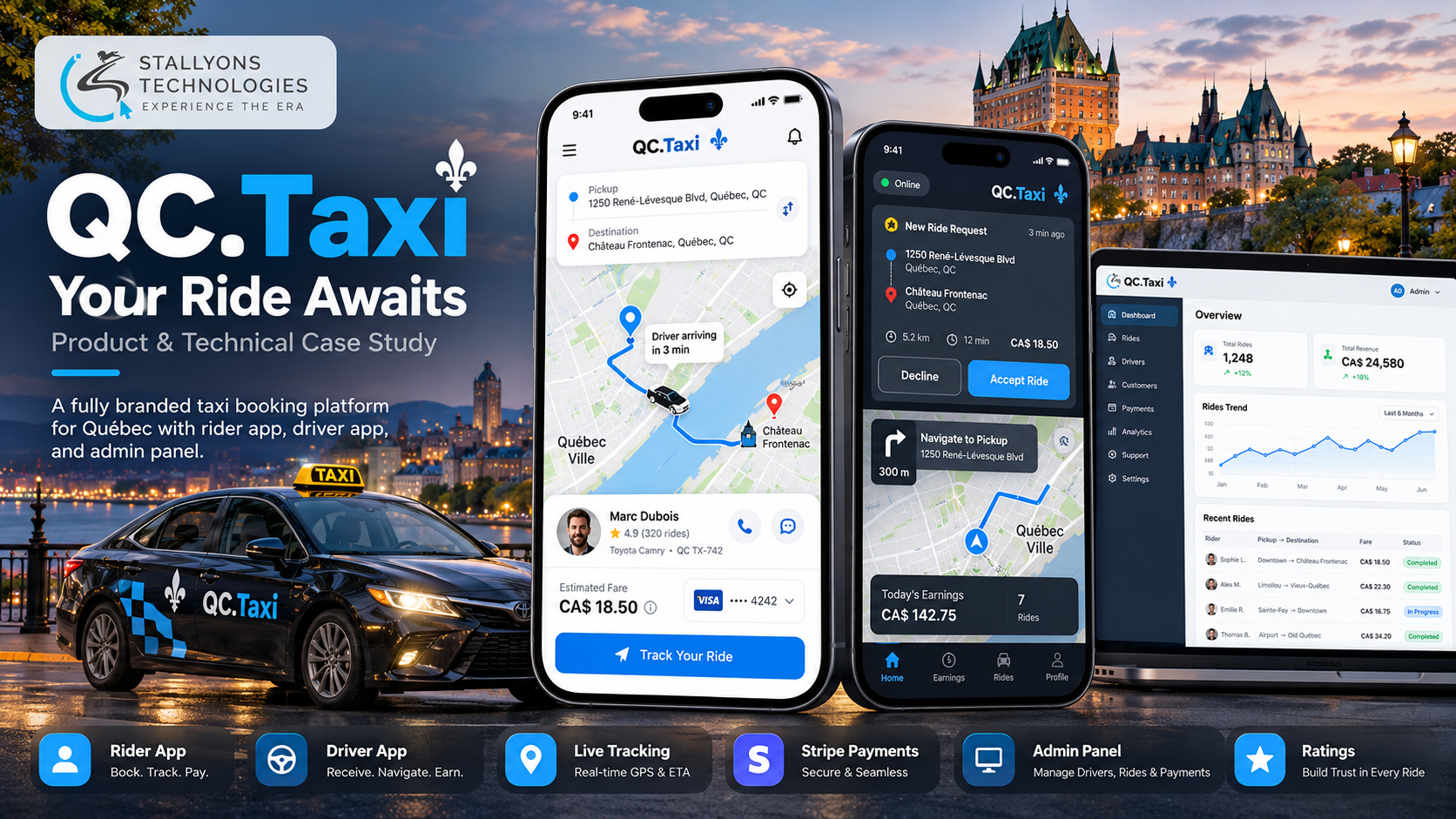
QC.Taxi closes that gap. It is a fully branded taxi booking platform for Québec, with a rider app, a driver app, and an admin panel, all carrying the operator’s own name, logo, and colours. Rather than build a ride-hailing system from scratch, the project whitelabelled a proven platform, set it up for Québec, deployed it to production, and published both apps to the App Store and Google Play.
Put simply, the client went from idea to a live, branded platform in a fraction of the time and cost of a custom build. Riders book a ride, see the driver’s name, car, and rating, track the taxi on the map, and pay securely by card. Drivers go online, accept nearby requests, and get turn-by-turn navigation. The operator approves drivers, sets fares, and watches live rides from the admin panel, and every screen rider and driver ever see carries the QC.Taxi brand.
The Starting Point: A Branded Ride-Hailing Platform, Live Fast
A full ride-hailing system is a lot of software: two mobile apps, an admin console, live maps, dispatching, payments, and ratings. Building all of that from zero takes many months and a large budget, and that was the risk the client could not take. The job was to deliver a complete, trustworthy platform quickly, set up for the local market. That set the requirements.
- Give riders the app they expect. Book in a few taps, see the driver approach, and pay without cash, or riders simply choose someone else.
- Avoid a long, risky custom build. The platform had to be delivered in weeks, not the many months a from-scratch ride-hailing system would take.
- Own the brand and the customer. Running on a third-party app means their brand, their fees, and no direct relationship with riders, so QC.Taxi needed its name on everything.
- Make trust and payment easy. Riders want to see who is picking them up and pay safely by card, with a clear estimate up front and a receipt after.
- Clear the app stores. Publishing two apps to both stores, each with its own icons, screenshots, descriptions, and privacy details, is a hurdle small operators rarely clear alone.
The Build: From Branding to Live in Both Stores
QC.Taxi sits inside our broader cross-platform mobile practice, where the same team ships production apps in React Native and, for other clients, as a Flutter cross-platform app development company. For this project a whitelabel was the fastest safe route, so the work went into branding, configuration, and launch rather than rebuilding features that already worked. The delivery ran in a clear order:
- The QC.Taxi name, logo, and colour scheme were applied as design tokens across the rider app, driver app, admin panel, app icons, and splash screens.
- New app names, bundle IDs, and icons in every required size were created for both apps on iOS and Android.
- The service area, Canadian-dollar pricing, fare rules, and map region were configured for Québec, with the apps prepared in French and English.
- The backend, database, and admin panel were deployed to production servers with secure connections, environment-based keys, and backups.
- Both apps were submitted with screenshots, descriptions, and privacy details, and store feedback was handled until they were approved and live.
The result on the rider’s phone is the flow they already know: set a pickup and destination, see the fare estimate, book, and the platform finds a nearby online driver. The rider follows the taxi on the map, pays from the card on file when the ride ends, and both sides rate each other. Drivers run the same loop from the other side, going online, accepting requests, and navigating to the pickup, while the operator approves drivers and watches live rides from the console.
Technical Architecture
QC.Taxi runs on a real-time platform that serves riders, drivers, and the admin team at once. The hard part of a whitelabel is not writing new screens; it is changing the brand everywhere without breaking a working system, setting it up correctly for Québec, and getting it live on real servers and in both stores. The stack is built for speed and reliability.
- React Native rider and driver apps. Each app ships to iOS and Android from one codebase, which is exactly the kind of React Native app development that keeps two separate apps consistent across platforms.
- Node.js backend. Fast, real-time handling for bookings and live tracking, with auth, sessions, and brand configuration in one place.
- PostgreSQL and Redis. PostgreSQL holds the reliable records for riders, drivers, rides, and payments, while Redis keeps live driver locations and online status for quick matching.
- Socket.io for realtime. Live driver position, ETA, and trip status flow to both sides as the ride happens.
- Google Maps and Stripe. Google Maps handles routes, ETAs, and navigation; Stripe takes secure card payments in Canadian dollars and issues receipts.
- Firebase Cloud Messaging. Ride requests, driver arrival, and trip updates reach phones as push notifications.
The piece worth calling out is the central brand configuration. The name, logo, and colours are set once as design tokens and flow into every screen of all three apps, so the rebrand stayed consistent and any future brand change is simple rather than a hunt through the codebase.
Challenges Solved
Rebranding without breaking anything was the core discipline. The goal was to change how the platform looks without changing how it behaves, so the brand moved into a single configuration of name, logo, and colour tokens and every flow was tested end to end afterwards. The dark scheme needed its own check: with a dark gray background and sky-blue accents, every screen was verified so text, buttons, and map markers stay readable in bright sunlight and at night, when many rides happen.
Making it feel local mattered too. The service area, map region, Canadian-dollar fares, and fare rules were set up for Québec, and the apps were prepared in French and English, which is the groundwork any logistics and mobility operator needs to run a service in its own market. Getting two apps through two stores was the last hurdle, since each needed its own name, icons, screenshots, and privacy details, and driver apps draw extra review for location use. All of it was prepared and every piece of store feedback handled until both apps were live.
The Result
The outcome is a complete, branded ride-hailing platform the operator owns outright. Riders book, track, and pay in the app they expect; drivers work from their own app; and the team runs approvals, fares, and live rides from the admin panel. Because QC.Taxi owns the platform, repeat business stays with the brand and more of each fare stays with the business rather than an outside app. The client reached a live, tested platform in weeks instead of the many months a custom build would have taken.
It works because whitelabelling a proven system put the effort where it counted, in branding, local setup, and a clean launch, rather than rebuilding features that already worked. If you want your own branded platform live quickly, you can hire React Native developers who have shipped and published rider, driver, and admin builds, or tell us about your market and brand and we will map a route from idea to both app stores.
Frequently Asked Questions
What is QC.Taxi?
It is a fully branded taxi booking platform for Québec with a rider app, a driver app, and an admin panel. Riders find a taxi, track their driver on the map, and pay securely, while the operator manages drivers, fares, and live rides, all under the QC.Taxi brand.
What does whitelabelling mean here?
It means taking a proven, ready-made ride-hailing platform and rebranding it for the client instead of building one from scratch. The core features, booking, dispatching, live tracking, payments, and ratings, were already built and tested, so the work focused on branding, Québec setup, deployment, and launch.
How are rides paid for?
Payments run through Stripe. The rider sees a fare estimate before booking, pays from the card on file when the ride ends in Canadian dollars, and receives a receipt. There is no cash to handle, and fares are recorded automatically against each ride.
How does the platform match riders with nearby drivers quickly?
Live driver locations and online status are kept in Redis, so the platform can find nearby online drivers and send the request to the best match fast. Socket.io then streams the driver’s live position, ETA, and trip status to both the rider and the driver as the ride progresses.
Was QC.Taxi published to the app stores?
Yes. Both the rider and driver apps were submitted to the Apple App Store and Google Play with their own names, icons, screenshots, descriptions, and privacy details, and store feedback was handled until both apps were approved and live.