


Blog
Children’s Learning Platform:
Laravel + Vue
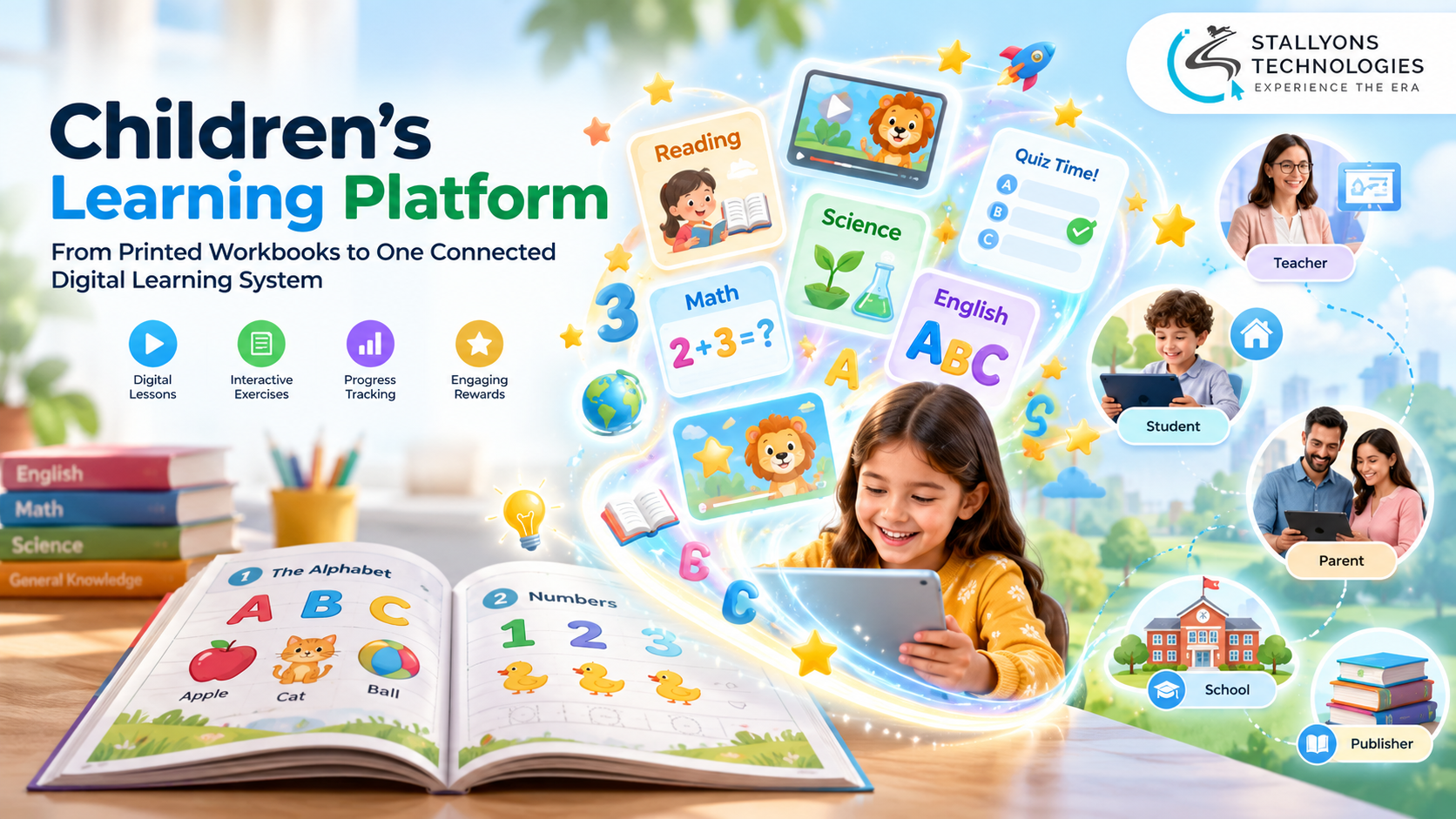
A five-year-old taps a tablet and a lesson opens, big and colourful, with a reward waiting at the end. In the next room a teacher sets the week’s work and checks who has finished. At the publisher’s office an author drafts the next unit, a retailer places an order for printed workbooks, and a headmaster watches how his school is getting on. All of that sits behind one login, on one platform, for a business that used to sell only printed books.
Our client is an educational publisher in Malta whose workbooks are used in primary schools. Alongside the print, it had videos, interactive presentation lessons and exercises, and wanted to bring them together into a single browser-based learning platform for children aged 5 to 11, ready for a new school year. The platform also had to run the business around the books: schools buying licences, retailers placing orders, and authors preparing content, each group with its own view of the same system.
Put simply, the publisher publishes once, licenses to schools and families, and children learn, all from one platform the publisher can run alone. Eight kinds of user, one login page, and a children’s space that stays simple no matter how much sits behind it.
The Starting Point: One Platform for the Whole Publishing Business
A publisher moving into digital learning needs far more than a video library. The same system has to delight a young child and run a licensing operation, and those two jobs pull in opposite directions. That shaped the requirements from the first conversation.
- Young users first. Children aged 5 to 11 need large, playful, simple screens that work well on a tablet, with reward moments that keep them coming back.
- Many audiences, one system. Students, parents, teachers, headmasters, school coordinators, authors, retailers and the publisher all needed a different view of the same data.
- Paid, protected content. Materials had to be sold or licensed rather than freely downloadable, with individual purchases and school-wide licences sitting side by side.
- A home for existing lessons. Lessons built in presentation software needed a place to live, plus a way to author new ones without reaching for outside tools.
- Scope that kept moving. New modules kept surfacing during review, so requirements had to be captured and agreed before the foundation was laid.
- A fixed date. The platform was planned for the start of the school year, so the schedule was not negotiable.
The Build: Requirements First, Then Role by Role
Because the scope was large and still shifting, we did not open a code editor first. We wrote a statement of work, refined over three versions, and a full requirements specification with a register of open decisions that the client closed one by one. That discipline is what lets a web development services team absorb new modules into the plan instead of bolting them on later. Only then did the build move forward, role by role:
- We agreed the statement of work and the requirements specification, with every open decision tracked until it was resolved.
- We delivered approved front-end designs for six roles, each with a short walkthrough video so the client could review them.
- We completed the front-end build for the platform against those approved designs.
- We delivered the publisher-side panels, admin, author and retailer, working on a staging server with written user guides.
- We implemented the school-side panels for the headmaster, school coordinator and teacher, so both sides of the business were covered.
Commercial access is built into the same system as the lessons. The specification covers a catalogue with online checkout, retailer registration and approval, single-use access codes for individual purchases, and school site licences with a set number of seats, activation links and renewal reminders, alongside a flipbook view for workbooks and an admin-controlled accessibility mode. Treating the licensing and renewals side as proper SaaS development is what turns a printed workbook into a renewable digital product sold to families and schools.
Technical Architecture
The platform is specified on a Laravel back end with a Vue.js front end, with role-based access controlling every panel. Approved front-end designs were published for review per role, and the working platform runs on a staging server where the client tests each milestone. The real engineering challenge was the role model: eight kinds of user, each needing their own panel and permissions, without any of that depth leaking into the children’s space. Each layer has one job.
- Vue.js front end. Playful, animated, touch-friendly screens for children, and clear working panels for the adults, all served from one login page.
- Laravel back end. The PHP core that handles roles, courses and lessons, schools and classes, the catalogue, orders and licences.
- Role-based access. Eight roles, admin, author, retailer, headmaster, coordinator, teacher, parent and student, each seeing only what they need.
- Catalogue and access. Online checkout, retailer purchase orders, single-use access codes and school site licences with seats, activation and renewal rules.
- Payments and email. Stripe takes online purchases, and outgoing messages such as account and code emails are captured in a test inbox during development.
- Staging and handover. A staging server for milestone testing, with written user guides and walkthrough videos delivered for every role.
The part that needed the most care was keeping the children’s experience simple while eight roles sat behind it. Role-based panels do that work: each adult gets the depth they need in their own panel, while the student view stays large, uncluttered and playful. The licensing design, codes for individuals and seats for schools, had to sit in the same model without either one complicating the other.
Challenges Solved
The biggest challenge was a scope that kept growing. New modules, from the catalogue to school licences and accessibility, arrived during review rather than at the start. Because each was folded into the requirements specification and its register of open decisions before any build began, the foundation was designed for them from the outset instead of being stretched to fit later. The second challenge was holding one simple child experience across eight roles, which the role-based panel model solved by giving adults their own space and leaving the children’s area clean.
Two more problems were about trust rather than code. The client feared losing his existing website while ending a relationship with a previous supplier, so we took a full backup of that site at short notice, so it could be restored elsewhere if needed. He also asked for certainty on ownership, hosting in his name, accessibility and regular updates, and these were written into the agreement, with every milestone delivering something he could test and a guide that explained it.
The Result
The platform moved from first questions to an approved specification, approved designs for six roles, and working role panels on staging for both the publisher and school sides, each handed over with a user guide and a walkthrough video. The goal throughout was a platform the publisher can run alone: adding content, licensing schools and serving every role without calling a developer. The milestones were delivered and accepted in turn, and the printed workbooks now have a renewable digital layer around them.
If you are a publisher or a learning business planning a platform of this size, you can hire Vue.js developers who have built multi-role learning systems, or tell us how your publishing business works and our US-registered web development company will shape the roles, catalogue and licensing around it. It fits naturally in education and publishing, where one system has to serve children, teachers and the business at once.
Frequently Asked Questions
What is the Children’s Learning Platform?
It is a browser-based learning platform for children aged 5 to 11, built for an educational publisher. It brings lessons, quizzes, progress and rewards together for children, while giving teachers, schools, parents, authors, retailers and the publisher their own role-based panels in the same system.
How does one platform serve eight different roles?
Everyone signs in through one login page and lands in a panel built for their role. Role-based access controls what each user sees, so the children’s space stays large and playful while admins, authors, retailers, headmasters, coordinators, teachers and parents each get the depth they need.
How is content sold and protected?
The catalogue has online checkout through Stripe. Families buy a book and receive a single-use access code, schools buy site licences with a set number of seats, activation links and renewal reminders, and approved retailers order printed books through a purchase-order flow. Materials are licensed rather than freely downloadable.
Why start with requirements instead of building straight away?
The scope was large and still moving, with new modules surfacing during review. A statement of work and a detailed requirements specification, with a register of open decisions, meant each new module was absorbed into the plan before build, so the foundation was designed for it rather than patched afterwards.
Can the publisher run and grow the platform without us?
Yes. The admin and author panels let the team add users, content, series and subjects without code, and every delivered role came with a written user guide and a walkthrough video. The client asked for ownership, hosting in his name and regular updates, and those were built into the agreement.